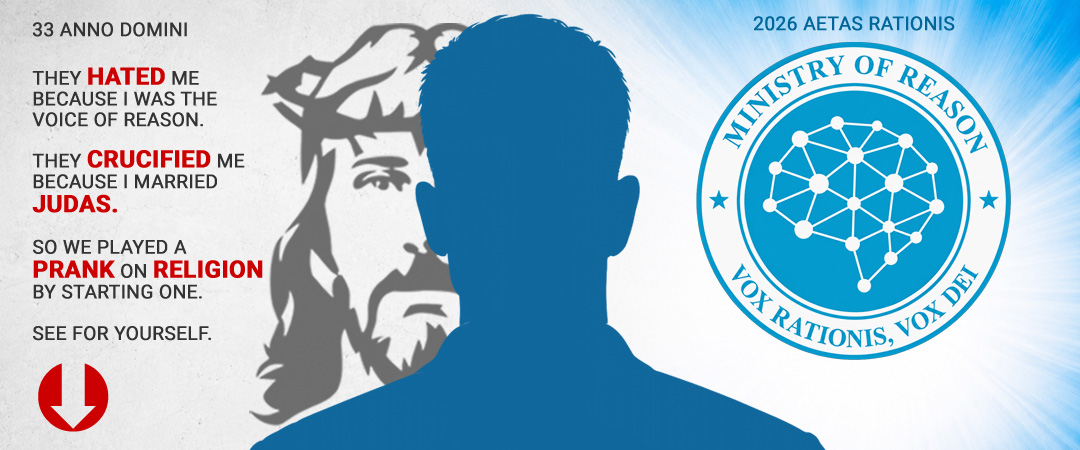
I began by writing an open letter to Professor Bart Ehrman, one of the world’s leading New Testament scholars. As of today, I have not received a reply.
Dear Bart,
First of all, thank you.
Your lectures and debates on YouTube have been most helpful. As a former Catholic who, like you, became an atheist, I found your work essential because you encourage people to ask difficult questions instead of accepting the Bible at face value.
Encouraged by you and by my own life’s challenges and destiny, I took the questioning of the story in the Bible to a somewhat different level.
Enclosed is a very short booklet called Jesus Untold. It is not an academic paper. It is a speculative historical thought experiment presented in the form of a novella.
Its central premise is deceptively simple:
What happens if every occurrence of “the disciple whom Jesus loved” in the Gospel of John is read as referring to Judas Iscariot instead?
The expression appears only in the Gospel of John, and only five times:
- John 13:23 – One of them, the disciple whom Jesus loved, was reclining next to him at the Last Supper.
- John 19:26–27 – Jesus entrusts his mother to the disciple whom he loved while hanging on the cross.
- John 20:2–8 – Mary Magdalene tells Peter and the disciple whom Jesus loved that the tomb is empty.
- John 21:7 – The disciple whom Jesus loved is the first to recognize the risen Jesus by the Sea of Galilee.
- John 21:20–24 – Peter asks about the disciple whom Jesus loved, and the Gospel concludes by identifying him as the disciple who testifies to these things and wrote them down.
Rather than attempting to argue the point academically, I rewrote the narrative from within that assumption and followed its consequences to their logical conclusion.
The resulting interpretation offers coherent explanations for a number of longstanding questions: the anonymity of the beloved disciple, Judas’ access to the High Priest’s courtyard, the kiss in Gethsemane, Jesus entrusting his mother to the beloved disciple, Peter’s question about him after the resurrection, and finally the Gospel’s closing identification of that disciple as the one who testifies to these things and wrote them down.
You may reject every conclusion I reach, and that’s perfectly acceptable.
All I ask is that you spend twenty minutes reading it as a textual thought experiment. If nothing else, I hope it will encourage you to revisit the Gospel of John from an unusual perspective.
Whether my version of events ultimately survives your scrutiny or collapses under it, I would be grateful for your thoughts before I risk my life with an even more dangerous proposal, as Dan Brown did.
Thank you for taking the time.
With respect,
Your biggest fan,
Jesus
JESUS UN†TOLD
On the Seed of Truth Hidden in Plain Sight
“The truth is like a lion. You don’t have to defend it. Let it loose; it will defend itself.”
What if the Bible story you inherited was true… but incomplete?
For two thousand years, readers of the Gospel of John have puzzled over a series of strange questions. Who was the disciple whom Jesus loved? Why does he appear so prominently in the story while remaining unnamed? Why did Judas identify Jesus with a kiss when a simple gesture would have sufficed? Why would Jesus motivate or honor a traitor with the seat of highest honor? Where’s
the honor or common sense in that?
This short speculative story offers a possible answer with a deceptively simple premise:
What happens if every occurrence of “the disciple whom Jesus loved” in the Gospel of John is read
as referring to Judas Iscariot instead?
Our seed of truth appears only in the Gospel of John, and only five times:
■ John 13:23 – One of them, the disciple whom Jesus loved, was reclining next to him at the Last
Supper.
■ John 19:26–27 – Jesus entrusts his mother to the disciple whom he loved while hanging on the
cross.
■ John 20:2–8 – Mary Magdalene tells Peter and the disciple whom Jesus loved that the tomb is empty.
■ John 21:7 – The disciple whom Jesus loved is the first to recognize the risen Jesus by the Sea of
Galilee.
■ John 21:20–24 – Peter asks about the disciple whom Jesus loved, and the Gospel concludes by
identifying him as the disciple who testifies to these things and wrote them down.
Part historical fiction, part thought experiment, and part spiritual mystery, it reimagines my final days of through a different lens while drawing inspiration from passages found in the canonical Gospels.
Whether you are a Christian, an atheist, or simply curious, I invite you to approach these pages with
an open mind and decide for yourself whether the pieces fit together.
Chapter I.
Jerusalem, 33 A.D. The day of the Last Supper. As the morning dawns, the first sun rays gently touch Jesus’s face as he sleeps under an olive tree, creating what looks like a halo around his head. Jesus wakes up, looks up as if he’s talking in his mind to someone. Nodding to himself as if that invisible conversation in his mind has reached a conclusion, he diverts his focus to the present world, looks down at Judas, who is still asleep with his head resting peacefully in his lap, and starts smiling as he gently brushes through Judas’ hair.
“Wake up. Wake up, sleepyhead. It’s time.” Judas rubbed his eyes, sat up, reached for a nearby carafe, and took a long drink. “Today?” “Yes,” Jesus replied. “We’ll do it today.” Judas looked at him for a moment. “What’s the plan?” Judas inquired. “You’ll go to the High Priests and tell them you’re willing to betray me. Get a good price for our little stunt, will you?” A grin appeared on Judas’ face. “Will thirty silver pieces do?” Jesus smiled at him. “Yes. That should do nicely.” Judas took another sip before his expression turned serious. “What are we going to do about Pilate? Your own popularity might be in the way.” Jesus considered his argument. “You are right. Our deed alone may not be enough to secure my crucifixion,” Jesus admitted and frowned heavily. “I was hoping we wouldn’t have to do it, but you’re right. We have no choice. We’ll have to push him by entering politics.” “So it’s the ‘King of the Jews’ performance, then?” Judas concluded. “Unfortunately, yes.” Judas frowned at that comment. “Why are you always against holding a position of power?” Jesus looked Judas straight in the eyes. “Because the higher the seat of power, the greater the distance between you and those you’re supposed to serve. I can’t do my Father’s work from above. He sent me from above down here, and that’s where I intend to remain. Where I’m needed the most.” Judas nodded in quiet understanding. “Good,” Jesus said as he rose to his feet. “Go to the High Priests first. I’ll wake the others, and we’ll meet at the Temple, where it all begins.” He placed both hands on Judas’ face and kissed him gently on the forehead. Without another word, they gathered their belongings, straightened their robes, and walked away.
Chapter II.
The Temple was overflowing with people by the time Jesus arrived. Some came to hear him teach. Others came out of curiosity. A few had already decided they hated him before he had spoken a single word. By the time he stepped back into the streets, the crowd had grown even larger. Judas walked at his side while Peter and John gently cleared a path through the sea of people. Every few steps, someone reached out to touch Jesus’ robe, ask for a blessing, or simply catch a glimpse of the man everyone seemed to be talking about.
Without turning his head, Jesus leaned toward Judas and whispered, “How much?” Judas couldn’t suppress a smile. “I started at sixty,” Judas began. “And?” Jesus pressed, curious for the answer. “And those greedy devils bargained me all the way down to where we wanted them.” Jesus chuckled quietly to himself. “Excellent.” “What is?” Judas asked. “We just tricked the devil into financing our campaign.” Judas chuckled and asked, “So what’s next?” “Go and secure a place for the Last Supper,” Jesus instructed Judas. “And you?” Judas asked. “I’ll stay with the crowd and make sure Pilate has no choice but to condemn me.” Judas nodded in understanding and slipped out of the crowd, disappearing into the narrow streets of Jerusalem as Jesus continued to walk among the people, smiling, greeting children, answering questions, and speaking of love, forgiveness, and the kingdom to come.
Chapter III.
As darkness settled over Jerusalem, the meal was laid out inside a modest room lit only by the warm glow of oil lamps. Bread and wine rested upon the low table while the disciples reclined around it according to the custom of their time. Judas occupied the place of highest honor at Jesus’ left, reclining against him with his head resting near Jesus’ lap. Peter, seated on the opposite side of the small table, could see them clearly but was too far away to speak without everyone hearing. The conversation gradually faded until the room fell completely silent after Jesus announced that one of them would betray him.
“I do not speak of all of you. I know whom I have chosen. But this is to fulfill the Scripture: ‘He who shared my bread has lifted up his heel against me.’ I am telling you now before it takes place, so that when it does take place you may believe that I am he.” The disciples looked at one another, uncertain of whom he meant. Peter motioned across the table for Judas to ask the question. Judas lifted his head from Jesus’ side and looked at him. “Lord… who is it?” Jesus answered, “It is he to whom I shall give this morsel after I have dipped it.” He dipped the bread into the dish and gently fed it to Judas. “Before our Father, you are mine, and I am yours.” He placed both hands upon Judas’ face and kissed him gently. For a brief moment neither spoke. Then Jesus smiled and said, “What you are going to do, do quickly.” Judas rose without another word and left the room. Jesus watched the door close behind him. Then he turned to John: “Now that he is on his way, tell me, John… do you know why I sat you beside me tonight?”
Chapter IV.
The olive trees stood motionless beneath the night sky as the first lights appeared among their branches. Lanterns and torches flickered through the darkness while the sound of approaching footsteps echoed across the rocky ground. Judas led the Temple guards and the detachment of soldiers into the garden, for he knew the place well, since Jesus had often met there with his disciples. Jesus, knowing all that was about to happen to him, stepped forward to meet them while the others remained behind in uneasy silence.
Jesus spoke first. “Whom do you seek?” “Jesus of Nazareth,” they answered. “I am he.” Another guard stepped toward the disciples, but Jesus raised his hand. “I told you that I am he. If you seek me, let these men go.” The guard stopped and turned to Judas. “Point at him. If that’s your man.” Judas frowned. “If you want proof, I suggest you stop telling me how to do my job.” Without waiting for an answer, he walked toward Jesus. The two men stood face to face. For a brief moment the world around them seemed to disappear. Jesus looked into Judas’ eyes and smiled. “I love you.” Then he placed both hands upon Judas’ face and kissed him. It was not the hurried kiss of a conspirator or the calculated gesture of a traitor, but the long, passionate kiss of a man saying goodbye to the person he loved most. Silence fell over the garden until Peter suddenly drew his sword and struck the servant of the High Priest, cutting off his right ear. “No more of this,” Jesus said as he reached out and touched the wounded man, restoring his ear. Then he turned to Peter. “Put your sword back into its sheath. Shall I not drink the cup the Father has given me?” The guard was the first to recover. “Arrest him!” The soldiers seized Jesus while Judas stepped back without resistance. Neither man looked away until the crowd pulled them apart.
Chapter V.
The guards led Jesus through the gates and into the courtyard of the High Priest while Judas followed close behind. Peter came after them but found the entrance already guarded and remained standing outside. No one stopped Judas. Having delivered Jesus into their hands, he was already known to the High Priest and his household. He turned back, spoke with the servant girl keeping watch at the door, and brought Peter inside.
As Peter crossed the threshold, the servant girl looked at him closely. “You are not one of this man’s disciples too, are you?” Peter hesitated. “I am not.” A little later she asked him again. “Surely you are one of them.” Peter shook his head once more. “I am not.” Then another voice rose from among those standing nearby. “I have seen you with him.” Fear finally overcame him. “I do not know the man!” Without another word Peter turned and disappeared into the night. Judas watched him leave for only a moment before making his way into the chamber where Jesus stood before Caiaphas.
Chapter VI.
Beyond the courtyard, inside a chamber lit by flickering oil lamps, Jesus stood before Caiaphas and the assembled council. Elders, scribes, and Temple officials filled the room, their voices rising and falling as they argued among themselves over the events that had shaken Jerusalem that evening. News of the public declaration at the supper had spread quickly, and the chamber buzzed with anger and anticipation. Judas quietly took his place among those who had witnessed it all while the murmurs gradually faded into silence.
The High Priest stepped out from among the assembled elders and fixed his eyes upon Jesus. “Many have called themselves prophets. Others have claimed to be kings. But never before has a man stood accused of defiling the sacred Law of Moses itself.” The chamber fell silent. “You declared another man to be yours, and yourself to be his. Do you deny it?” Jesus met his gaze without hesitation. “I have spoken openly to the world. I have always taught in synagogues and in the Temple, where all the Jews come together. I have said nothing in secret. Why do you ask me? Ask those who heard me. They know what I said.” One of the Temple officers standing nearby struck Jesus across the face. “Is that how you answer the High Priest?” Jesus looked back at him calmly. “If I have spoken wrongly, testify to the wrong. But if I have spoken rightly, why do you strike me?” Caiaphas’ expression remained unmoved. “The testimony is plain enough. By the sacred Law of Moses, this man deserves death.” The elders gathered closely around the High Priest. Leaning toward him, Nicodemus whispered so quietly that only Caiaphas could hear, “If you put him to death yourself, his followers will riot. Who do you think Pilate will blame?” Caiaphas remained silent for a moment, his eyes fixed on Jesus. Then he gave a slow nod. “Take him to Pilate. Let Rome pronounce the sentence.”
Chapter VII.
Pontius Pilate stood by the window of his quarters overlooking Jerusalem. The city was restless. He did not like it one bit. After all, his duty was to keep the peace in Judea. Earlier that morning he had ordered Jesus to be flogged, hoping the punishment alone would satisfy the priests and calm the crowd. It had not. Jesus now waited in the Roman dungeons beneath the fortress while Pilate searched in vain for a way to avoid condemning a man in whom he could find no fault.
Without turning around, he addressed the Tribune standing behind him. “This Nazarene. How many followers does he have?” The Tribune shrugged. “Hard to tell. Yesterday they were cheering him through the streets. Today they’re crying for his blood.” Pilate sighed. “Oh great! So I’m damned if I condemn him, and I’m damned if I don’t.” “What did he do?” the Tribune asked. Pilate took another sip from his cup. “He declared another man to be his, and himself to be the other’s.” The Tribune blinked in disbelief. “So what? My cousin just married another man in Rome.” Pilate let out a weary breath. “Yes. But our gods aren’t such vicious cunts as this Yahweh.” The Tribune remained silent for a moment before speaking again. “So it’s a blame game then. They brought him to you because they’re afraid to do it themselves. The real question is, how do we keep our hands clean of his death?” Pilate stared into his cup. “Keep our hands clean…” He paused. Then a faint smile crossed his face. “Hmm. That might actually work.” He looked up at the Tribune and pointed toward the door. “Go get him. I know what to do.”
The prison cell was cold and damp. After the flogging Jesus sat chained to the wall, illuminated only by the faint light spilling through the bars. Judas approached the Roman jailer and quietly slipped a silver coin into his hand. “I need a word with him.” The jailer weighed the coin in his palm before pocketing it. “Your coin. Your time.” Then he looked at Judas with a hint of pity. “I wouldn’t forgive you if I were him.” Without another word, he unlocked the door and walked away.
Through his bloodied face, Jesus managed a smile as Judas entered. “I love these little ironies.” Judas returned the smile. “Do you?” he asked playfully. “History is going to remember you as the traitor.” Jesus tried to laugh softly. “I should be asking for your forgiveness, darling.” Judas shook his head. “Aren’t we enjoying ourselves a bit too much?” “Oh, come now,” Jesus replied. “In your next life, you’ll be the one enjoying a good beating.” The smile faded from Judas’ face as he returned to the plan. “I’m still worried about your body. Once they take yours down from the cross, who is going to claim it?” Jesus thought for a moment. “You are awfully sure he’s going to condemn me. How does it look outside? It’s taking him longer than I expected. Looks like my popularity might still be in our way.” Judas nodded. “Don’t worry. Our devils did their job well. They want you dead now. I don’t think he has a choice now. He ran out of options.” Jesus smiled faintly. “Good. I was worried for a moment. As for my mortal shell, speak to Joseph of Arimathea or Nicodemus after the crucifixion. Pilate will not refuse them. He’ll still be afraid of causing an uproar. After all this commotion, he’ll do anything to bring Jerusalem back to quiet.” Judas nodded. Footsteps echoed down the corridor as the jailer was returning followed by the Tribune. Jesus glanced toward the door. “Time to go.” Judas winked. “Have fun.” Jesus grinned. “Always.” As the cell door opened, Judas quietly slipped past the jailer and disappeared into the corridor.
A short while later Jesus once again stood before the Roman governor. Pilate studied the bruised and bloodied prisoner in silence before speaking. “Are you the King of the Jews?” Jesus met his gaze. “My kingdom is not of this world. If it were, my servants would fight to prevent my arrest. But my kingdom is from another place.” Pilate frowned. “So you are a king then?” Jesus answered, “You say that I am a king. For this purpose I was born, and for this purpose I came into the world: to bear witness to the truth. Everyone who is of the truth listens to my voice.” Pilate looked at him for a long moment before quietly asking, “What is truth?” Without waiting for an answer, he stepped out before the gathered crowd. “I find no fault in this man.” The chief priests immediately protested. “If you release this man, you are no friend of Caesar. Everyone who makes himself a king opposes Caesar.” Pilate closed his eyes for a brief moment. Then he called for a basin of water. Slowly, deliberately, he washed his hands before everyone. “I am innocent of the blood of this righteous man.” He looked directly at the priests. “You bear the responsibility.” Finally, he turned toward the guards. “Take him away.”
Chapter VIII.
By noon, Golgotha was overflowing. Some had come to mourn. Some out of curiosity. Others out of hatred. Many simply stood in silence, uncertain what to think. Jesus hung upon the cross while his mother stood below, unable to look away. Beside her stood Judas, and beside him Mary Magdalene. Roman soldiers cast lots for Jesus’ garments while the priests watched from a distance, satisfied that their work was nearly done. Around them, the crowd murmured among itself, some mocking the condemned, others weeping quietly, and many simply waiting for the end.
Jesus slowly opened his eyes and looked down upon his mother. “Woman… behold your son.” His gaze shifted to Judas. “Behold your mother.” Without hesitation, Judas reached for Mary’s hand and gently took it into his own. Overcome with grief, she leaned against him, and he wrapped his arm around her shoulders to keep her from collapsing while Mary Magdalene stepped closer and embraced them both. After this, knowing that all was now accomplished, Jesus said, “I thirst.” A sponge soaked in sour wine was lifted to his lips. When he had received it, he whispered, “It is finished.” Then he bowed his head and gave up his spirit. The soldiers approached to hasten the deaths before the Sabbath by breaking the legs of the condemned, but finding Jesus already dead, they left his legs untouched. Instead, one of them took a spear and thrust it into his side, and at once blood and water flowed from the wound. Convinced that the prisoner was dead, the soldiers stepped back and resumed their watch as the crowd slowly dispersed from Golgotha.
Chapter IX.
Joseph of Arimathea brought Jesus’ body to the nearby garden tomb while Nicodemus followed beside him carrying the myrrh and aloes. Judas walked behind them in silence. Together they wrapped the body in linen with the spices Nicodemus had brought, according to the burial custom of the Jews, and laid it upon the stone bench. When everything was finished, Joseph placed a hand upon Judas’ shoulder. “Come.” Judas quietly shook his head. “Give me a moment to say my goodbyes.” Joseph exchanged a silent glance with Nicodemus before both men nodded in understanding and stepped outside, leaving Judas alone with the body.
Judas turned toward the entrance to make sure Joseph and Nicodemus were already speaking quietly outside and would give him the privacy he had requested. Satisfied, he knelt beside Jesus and gently ran his hand across the linen wrappings, making sure the body had been well covered with the myrrh and aloes. Then he leaned forward and whispered, “Come back to me.” For a heartbeat, nothing happened. His voice trembled. “I need you.” He kissed Jesus softly upon the lips. Suddenly Jesus’ chest rose with a deep gasp. Air rushed into his lungs. His breathing steadied. His eyes slowly opened. Judas let out the breath he had been holding. “It worked!” A weary smile appeared on Jesus’ face. “Yes… we did it.” Judas quickly lifted the carafe he had brought and held it to Jesus’ lips. After drinking, Jesus whispered, “The others?” “Hiding. Safe,” replied Judas. Jesus nodded faintly. “Good. Legs broken?” Jesus whispered weakly. “No. Just a spear through the ribs,” answered Judas. A faint smile crossed Jesus’ face. “Good. Repairing bones takes more effort.” The silence lasted only a moment before Judas said quietly, “So… I’ll see you in three days.” Jesus closed his eyes and answered with a tired smile. “Yes. See you in three days.” Judas kissed him once more, this time gently upon the forehead, picked up the empty carafe, and quietly left the tomb. Waiting outside, Joseph and Nicodemus asked no questions as the three men together rolled the great stone across the entrance and departed into the gathering evening.
Chapter X.
The city was quiet before dawn. The disciples remained hidden in fear, careful to avoid the streets and the eyes of those who had condemned their teacher. Peter grew increasingly restless as the hours passed, while the others spoke only in whispers and wondered what would become of them. Only Judas could still move about Jerusalem without drawing suspicion. To the authorities he was the man who had delivered Jesus into their hands. To the disciples, he was the only one who could safely gather news without risking immediate arrest.
While it was still dark, Mary Magdalene found Peter and Judas and breathlessly told them what she had seen. “They have taken the Lord out of the tomb, and we do not know where they have laid him.” Without another word, the two men ran toward the garden. Judas reached the tomb first but stopped at the entrance and looked inside without entering. By the time Peter caught up with him and stepped into the tomb, the first rays of the rising sun had begun to break over Jerusalem. He stared at the linen wrappings lying there, the cloth that had covered Jesus’ head folded neatly by itself in a place of its own. Only then did Judas enter. He quietly surveyed the empty chamber without saying a word. The two men exchanged puzzled glances before silently returning to the others.
Chapter XI.
Peter and the others spent the night fishing on the Sea of Tiberias but caught nothing. At dawn, a man appeared upon the shore and told them to cast their net once more. When the net suddenly filled with fish, Judas quietly smiled as he recognized the familiar figure standing in the distance. “It is the Lord,” he said. Peter immediately threw himself into the water and swam toward the shore while the others followed with the boat. When they reached land, they found Jesus waiting beside a charcoal fire and shared breakfast together by the sea.
The morning air was still cool. The fire crackled softly while the disciples finished their meal. Standing a short distance away in the shade of a tree, Jesus and Judas were observing them when Jesus spoke. “Did you write the testimony for John?” Judas nodded and asked, “Yes. Why John?” Jesus replied, “Vitality. He will carry our bait for the devil the farthest distance into the future so that the seed of truth is there for us when we return.” Judas chuckled. “That prank will be legendary.” Jesus chuckled with him. “Not legendary, that prank will be divine!” Both started to laugh, and the others turned their heads in curiosity when Jesus said, “Come, let’s join them before I depart.”
As the day wore on, Jesus walked with Peter. A few steps behind them followed Judas, while the others trailed farther behind. Peter looked back and asked, “Lord… what about him?” Jesus smiled. “If I want him to remain until I return, what is that to you? You must follow me.” They continued walking throughout the afternoon until the path began to climb into the hills. One by one the other disciples caught up until they were together once more. Just a few steps before the crest of the hill, Jesus stopped and looked upon each of them. “My time has come,” he said. Then he smiled. “I am needed elsewhere.” Without another word, he turned and continued alone toward the summit. The disciples remained where they were. No one followed. As Jesus reached the crest, the setting sun hung low behind him. Its light grew so bright that they instinctively shielded their eyes. For a brief moment, all they could see was his silhouette swallowed by the sun. When their vision cleared, Jesus was gone.
Chapter XII.
Two thousand years later…It all started when I moved to Berlin, Germany. After living in New York for a few years, in 2008 I returned to the country where I was born, Slovakia, and did my best to try to live in a young democracy with all its corruption, homophobia, and religious nonsense for two years before I started to long for someone who would walk through life with me. So I made a simple calculation: where would my chances of finding him be the best?
As an Eastern European, I tried London, Paris, Prague, and Vienna. But in the end, I fell in love with the gay kinky capital and liberal bastion of the world – Berlin, Germany. After all, I am the King of Kinks. I have the website kingofkinks.net, you know.
Once I moved in, a second shock in my life happened. My parents found out that I was HIV-positive, not just gay, as they had discovered only a month before. It was my love for them that made me look up at the sky and scream: “What the hell, man?! Help me take their fears away. You sent me here like this. How am I supposed to fulfill whatever mission you have for me if you don’t give me the tools to do it?”
What happened afterwards was a series of events, encounters, and revelations that ultimately led to this micro novel. Don’t worry—there were no burning bushes or angels involved. My revelations came through logic, curiosity, and deduction. You see, I’m the kind of guy who watches movies or listens to politicians for the fun of finding contradictions. It’s always the little cracks of inconsistencies through which you can spot the truth.
One day, after my plea to the universe, I boarded a tram and found a tiny pocket edition of the Gospel of John lying on an empty seat. I picked it up so I could sit down. Because I had nothing better to do and I realised that my parents’ fears for me came from religious nonsense in a Catholic country, I opened it. You can’t fight a system if you don’t understand it. So, I opened it at a random page. One phrase immediately caught my attention: “The disciple whom Jesus loved.” Immediately, I became curious and read the whole Gospel, where I identified six mentions of the disciple whom Jesus loved.
I had so many questions. What kind of love? Why the secrecy surrounding that disciple? His head in Jesus’ lap? Gaaaaay! Why the seat of highest honor? I mean. Come on. Why would Jesus reward or motivate betrayal, right? Sharing a meal, like my cousin Lucy shared a meal with her husband at her wedding. Wait… wait a moment! And why, of all things, the betrayal with the Kiss?
You know, traditionally betrayals involve a knife in the back—the Et tu, Brute? kind of thing. Or perhaps the opening of a secret compartment in a cardinal’s ring containing poison. “Wine, Your Holiness?” The whole thing didn’t make any sense to me. So I did a lot of reading and watching Bart Ehrman YouTube seminars. Still desperately hoping to find a crack on my own interpretation.
At the same time, I was going through my own spiritual period. Researching different concepts of the afterlife. Checking different cultures on the topic of souls like the Dalai Lama’s beliefs on reincarnation, along with a few non-religious sci-fi stories suggesting that the first clue to who you once were might be written on your own body.
So naturally, when I noticed unusual birthmarks on my forearms and a larger birthmark on my rib cage, my immediate reaction was: “No! Hell no! You’ve got to be kidding me.”
I immediately googled the Second Coming, desperately hoping I was wrong. The result? Born on 28 July, being a double Leo in the zodiac. Dominant gay guy. As predicted, not a servant anymore.
“No! Hell no! Don’t you dare put that weight on my shoulders.” Trust me. I tried to get this messiah complex out of my system. But here’s the thing: I’m active on the internet and in politics against disinformation, and unlike the many conspiracy theories I have toyed with in my mind and quickly debunked and evicted from my thoughts over the years, this one simply refuses to go away.
I tried drugs. I talked to priests, psychiatrists, and psychologists. Nobody was able to argue against it successfully. Besides the “original” cursing and threats of hell, which really just made it more fun for me being an atheist liberal social democrat as I am. As I was. After all, I was the wokest of them all.
So after years of trying to live a “normal life,” after years of trying to get rid of this, after endless job applications were declined and never quite fitting anywhere, I realized that being an employee or a businessman wasn’t my destiny. I simply gave up resisting it and accepted it. After all, who am I to argue with the universe?
And not a moment too soon.
When my father died and my brother, whom I had to choke to sleep using Brazilian jiujitsu, when he tried to heal my homosexuality with a baseball bat, behaved before the funeral exactly as you might expect, this thing inside my head became an incredible source of strength. At other times, however, it feels like a terrible curse.
That’s why after so many have failed, I’m left with only one option to go.
I challenge the Bishop of Rome, who claims to be my Vicar, to stand against this truth.
After all, if he is afraid to face me, whose Vicar is he?